
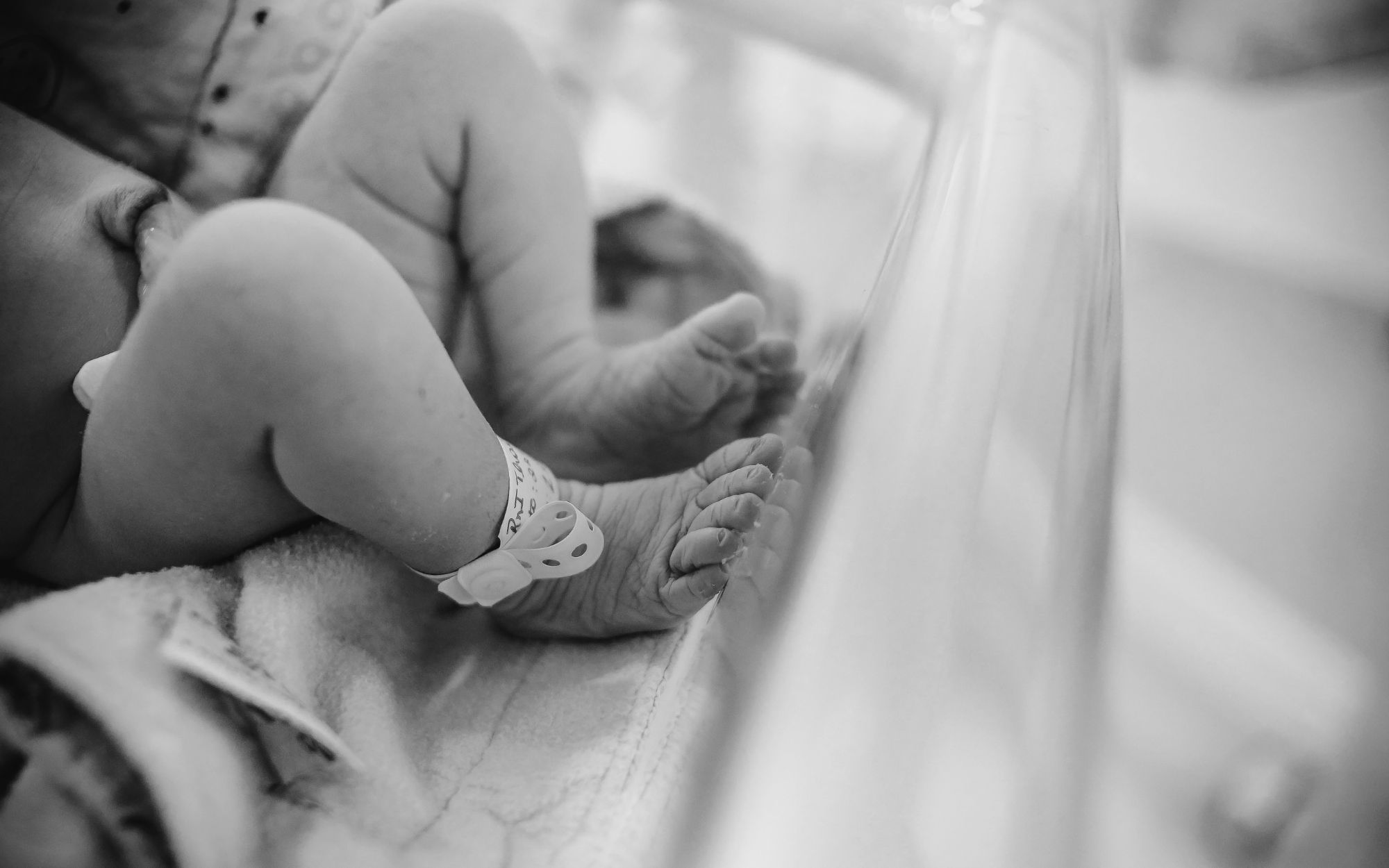
In the twilight of modern humanism, where biotechnology meets artificial intelligence, human life itself is increasingly approached as a technical problem to be solved rather than a mystery to be received. The rise of in vitro fertilization (IVF) — and its merger with AI-driven embryo selection, genomic profiling, and automation — signals a decisive turn in the history of creation. For the first time, man has set himself to manufacture his own offspring as product, to design the next generation as an artifact of choice rather than a gift of God.
The Holy Roman Catholic Church’s teaching remains unmistakable. From Humanae Vitae to Donum Vitae and Dignitas Personae, the Magisterium has reaffirmed that every child has a right to be conceived through the mutual self-gift of spouses united in the Sacrament of Marriage. To separate procreation from the marital act is to violate the integral unity of body and soul, love and life, God’s creative intention and human participation in it. IVF therefore represents not merely a technological innovation but a moral rupture — a new form of Gnosticism that seeks life without love, generation without communion, and control over nature without grace.

Cry of the Frozen Child: Ethics of Life in an Age of Machines
I. The New Biotech Horizon: Artificial Intelligence and the Promise of “Perfected” Reproduction
Companies like Conceivable Life Sciences now advertise “data-driven fertility” as the future of reproduction. Their platforms use machine learning to analyze thousands of variables — hormone levels, embryo imagery, DNA markers — to predict which embryos are “most viable.” The language of marital love is replaced by the language of statistical efficiency.
AI-assisted IVF offers a vision of procreation stripped of its sacramentality. What was once the fruit of marital love has been recast as a deliverable of technological expertise, processed through the logic of efficiency and control. The marketing rhetoric is seductive: higher success rates, customized outcomes, minimal “human error,” and scalable precision.
Conceivable Life Sciences, for instance, projects a staggering 6.5 million annual IVF cycles by 2034, an industrial expansion that would demand the flawless execution of approximately 1.3 billion discrete procedural steps—an operation no human team could conceivably perform within the limits of ordinary skill or attention. The company’s own conclusion is telling: only automation can achieve such perfection.
But perfection, in this context, conceals a peril. Beneath the sterile glow of innovation lies a deep theological deception—the notion that life is a project to be optimized rather than a mystery to be received. When technology becomes the new midwife of humanity, the gift of life is transformed into the product of design, and the child ceases to be the fruit of love and becomes instead the outcome of corporate calculation.
Catholic moral teaching has always affirmed that technology must serve the human person, never dominate or define him. Yet in the new frontier of reproduction, artificial intelligence is being grafted onto the act of generation itself, not as an aid to human fertility but as an accelerant to a mechanized program of conception. What was once a mystery of mutual self-gift is now subject to computational oversight and decision making.
In this technocratic order, the embryo is no longer regarded as a person but raw material expressed as data—a sequence of metrics, a constellation of pixels ranked and sorted by an algorithm. Artificial intelligence now pronounces the first judgment on human life, measuring worth according to a pre-programmed calculus of viability, desirability, and efficiency. What should be seen as an encounter with the loving action of procreation has been reduced to a calculated act of Darwinian selection in which a life is measured by fitness, not by sanctity.
Those embryos deemed “worthy” of implantation are advanced to the next stage, while others judged defective, less promising, or simply superfluous are quietly discarded, destroyed, or frozen indefinitely. The same technology that claims to create life thus presides over its silent culling. In the bright sterility of the lab, the image of God is weighed against statistical probabilities and found wanting.
This mechanized process cloaks itself in the language of compassion and progress, yet its inner logic is unmistakably eugenic. The embryo is treated not as a child to be loved, but as an experiment to be optimized. Those tiny persons who do not meet the standard are not mourned; they are disappeared. Thus, the child who survives enters the world already judged, while countless brothers and sisters are denied the dignity of being born.
II. Catholic Teaching on the Moral Order of Procreation
The foundational teaching is succinctly stated in Donum Vitae: “The origin of human life has its authentic context in marriage and in the family, where it is generated through an act which expresses the reciprocal love between a man and a woman.”¹ Every child possesses the right to be conceived as the fruit of spousal love, not the result of technical production.
The moral logic is not merely disciplinary but ontological. To separate the procreative from the unitive dimension of marriage is to fracture the human person and misuse the Creator’s design. In Aquinas’s terms, it is to make art usurp the domain of Nature, and thereby of Gratia.
Dignitas Personae reaffirms the perennial teaching that “in the procreation of a new human being, the married couple cooperate with God who transmits life through them.”² In authentic procreation, husband and wife act as co-creators with God—each child a living testimony to Divine generosity mediated through human love.
Artificial fertilization, however, transforms this sacred cooperation into competition and commerce. What God ordained as a covenantal act of self-gift becomes a transactional service mediated by contract, expertise, and cost. The doctor, the technician, and now the algorithmic machine insert themselves between spouses, converting their creative power into a commodity for purchase and sale.
The language of the fertility industry mirrors that of a corporate enterprise: clinics speak of “clients,” “success rates,” “productivity targets,” “inventory management,” and “quality control.” Embryos are “produced,” “tested,” “stored,” and “discarded” according to market efficiency and technological capability. Each human life is thus enveloped within a business framework—subject to pricing, competition, and performance metrics.
Even moral vocabulary is replaced with economic euphemism. Failure is called “inefficiency.” The destruction of embryos becomes “non-viability.” Surplus human beings are stored as “assets.” The result is not the fulfillment of human fertility but its industrialization.
In this new economy of reproduction, conception is no longer a moment of love but the deliverable of a service contract with terms and conditions to be met. The clinic’s organizational leadership host the marketplace where life is negotiated, purchased, and optimized. As a result, the formation of a family has been subsumed by the logic of biotechnology and finance where creation itself is itemized on a billable schedule and increasingly packaged as an employee health benefit.
Such a framework is incompatible with Catholic anthropology, which teaches that life originates not from production but from participation in Divine Love. To turn fertility into an industry is to redefine the human person according to utility, to measure value by output, and to subordinate the sacred to a results-driven enterprise. The spiritual result is devastating: the child, once a gift, is now a deliverable, and the womb, once a sanctuary, has become a site of manufacturing.
III. Father Tad Pacholczyk and the Embryonic Person
Few Catholic bioethicists have articulated the Church’s moral vision more clearly than Fr. Tadeusz Pacholczyk of the National Catholic Bioethics Center. He writes: “The awkward truth … is the fact that we are all embryos who have grown up, and if all men are created equal, then all embryos are human beings, each of whom ought to be unconditionally safeguarded and never exploited.”³
This simple statement dismantles the core illusion of IVF: that the embryo is not yet a person but a potential one. By the light of reason and faith, the embryo is already a complete, though undeveloped, human being — not something that will become a person but someone who already is.
Fr. Pacholczyk identifies two distinct moral problems within IVF: the “collateral damage problem” — the routine freezing and discarding of human embryos — and the “intrinsic problem,” which lies in the separation of procreation from the marital act.⁴ Together they constitute a profound assault on the integrity of life and love.
He warns of the “propensity to produce extra embryos, many of whom will either be discarded or frozen … caught in stasis for literally decades or forever.”⁵ These “frozen children,” suspended between life and death, are perhaps the most haunting symbol of modernity’s spiritual rebellion— life created but then never embraced. Their very existence cries out for the recognition of their humanity and for repentance for the sin of turning persons into inventory.
IV. The Philosophical Error of the “Right to a Child”
Modern liberal ethics is premised on rights, but in IVF the language of rights is misapplied. There exists no right to a child because the child is not an object of possession but a subject of love. As Fr. Pacholczyk writes: “Infertile couples may believe they have a right to children, when in reality they possess no such right … children are always meant to be a gift, freely given by the Giver of gifts.”⁶
A right is owed to a person; a gift is bestowed by love. To claim a “right to a child” is to convert the child into property—to invert the moral order of giver and receiver. The parents, meant to be cooperators with the Creator, become producers and consumers of life. This logic is inherently totalitarian because it grants to the will a creative power that belongs to God alone.
It is precisely this distortion of love and longing that has been seized upon by the IVF industry, a vast corporate apparatus that cloaks its profit motive beneath the language of compassion. These corporations exploit one of the holiest desires in the human heart—the yearning of husband and wife to share in God’s creative love by bringing forth new life. They do not heal that longing: they monetize it.
Advertising promises hope but sells dependency. Packages are priced in “cycles,” “add-ons,” and “success rates,” as though human life were a subscription service. Each failure becomes another billable attempt; each disappointment, another opportunity for revenues. Clinics market themselves as “fertility partners,” yet their partnership is inescapably transactional. They replace prayer with procedure, grace with guarantee, and covenant with contract.
Behind the sterile compassion of marketing campaigns lies a spiritually predatory dynamic. These enterprises manipulate the vulnerable moment when couples are suffering, when hearts are most open to the miraculous promise of conceiving a child. They offer not miracles but mechanisms—promising to satisfy a holy longing with a technological wizardry. In this way, IVF corporations become sinister actors in the spiritual economy, mimicking Divine creation while systematically excluding the Creator.
The tragedy is that these couples are not wicked; their desire is good, natural, and beautiful. But when that desire is separated from the moral order and surrendered to corporate science, it becomes susceptible to exploitation. The industry’s moral inversion turns hope into a product offering. Children are catalogued, priced, selected according to laboratory precision, and the most intimate act of love reduced to the cold economics of commerce.
Holy Mother Church, therefore, stands not as the enemy of longing but as its defender reminding couples that true fruitfulness is never purchased, never engineered, and never manipulated. It is received in cooperation with Divine Providence, not extracted from it. The IVF business promises the fulfillment of desire of having children but delivers a deeper desolation. The inevitable consequence is the substitution of a marketplace for a miracle, of procedure for paternity, of technology for trust in God.
V. Frozen Embryos, Eugenics, and the Logic of Control
Fr. Pacholczyk observes that IVF inevitably invites “quality control … just a fancy word for eugenics.”⁷ Once life is manufactured under laboratory conditions, selection is inescapable. Some embryos will be deemed “fit,” others “defective.” Cryogenic storage and destruction follow as a matter of course. The child’s worth is reduced to measurable traits such as chromosomal integrity, gender preference, predicted intelligence.
In this new eugenic order, the scalpel has been replaced by the algorithm. The tyranny of ideology has given way to the tyranny of data. Decisions once justified by pseudoscience are now sanctified by code. Cold calculations of “viability” and “genetic quality” determine who will be born and who will be discarded. The algorithm, cloaked in objectivity, becomes the executioner of the innocent by a mechanized conscience that kills without hatred, and therefore without remorse. Horrifying.
Under the banner of progress, we have even mechanized discrimination itself. What was once the sin of pride has become a system of exclusion in a freakish digital liturgy that dares to measure the image of God in terabytes and fabrication results.
The Sacred Scriptures call this impulse by another name: sorcery. In both the Old and New Testaments, pharmakeia—the manipulation of nature and life through forbidden arts—is condemned as rebellion against God’s order (cf. Exodus 7:11–12; Deuteronomy 18:10–12; Galatians 5:20; Revelation 9:21). Sorcery seeks to dominate creation rather than receive it; it replaces Divine Wisdom with human control.
So too, the technologies of artificial conception and genetic selection participate in a modern sorcery—a counterfeit creation—that attempts to seize the generative power of God and reengineer and redirect it according to human desire exclusively. IVF laboratories and AI algorithms are emerging as the new cathedrals of a technocratic rationalism, where human embryos (persons in their first and most defenseless stage) are often the necessary sacrifices to the illusion of progress and a program of child fabrication. The IVF “experiment” now seeks to build without moral constraint a terrifying human production line masked as scientific benevolence.
In this new era, man no longer perceives himself as a creature but as a maker—no longer a participant in Being, but its lone architect. The laboratory thus becomes the theater of a false transcendence, where the longing for dominion supplants the humility of wonder. Here, the scientist assumes the role of maker, and the AI algorithm becomes a mechanized Theo-drama, translating the will-to-create into the will-to-dominate.
This is not merely a moral perversion but a philosophical one: a confusion between the gift of being and the power of making. When the created order is treated as material for manipulation rather than a participation in the good, the sacred is emptied of meaning, and the human person is reduced to artifact. Such is the essence of technocratic idolatry: the substitution of the artificer’s pride for the Creator’s generosity, and the transformation of life itself into an object of manufacture.
VI. The Pastoral Response: Hope, Compassion, and Witness
Within the Church’s magisterial framework, it is understood that the prohibition to IVF and artificial reproduction is not a rejection of suffering couples but a defense of love’s integrity. The Holy Catholic Church stands as Mater et Magistra—both Mother and Teacher—protecting not merely doctrines, but persons.
Any couple who experiences infertility bear a particular cross. The longing for a child is good, natural, and sacred. Yet, as Dignitas Personae teaches, “the child is not something owed to one, but is a gift.”⁸ The Church therefore calls infertile couples to discernment, prayer, and ethical paths of assistance—such as NaProTechnology, adoption, or restorative reproductive medicine all of which are means that cooperate with, rather than replace, the Creator’s design.
Pastoral care must join moral truth with Divine Mercy. The frozen embryo, the infertile couple, the grieving parent—all are entrusted to the Church’s maternal compassion. Confession, spiritual direction, and healing ministries must accompany those who have participated in or been harmed by IVF. In this sense, Catholic Moral Theology becomes pastoral theology, uniting clarity with consolation.
VII. The Cry of the Frozen Child
Each frozen embryo stands as a silent witness to an age that has lost faith in the sanctity of every life. As Fr. Tad Pacholczyk observes, these tiny persons “get caught in stasis for literally decades or forever.”⁹ They are human beings suspended between being wanted and being abandoned, between potentiality and oblivion — the most fragile children of modernity, trapped between the will to power and the absence of love.
The modern world calls this “progress.” The Church calls it tragedy. To treat the smallest among us as excess inventory is to invert the order of creation itself. It is to echo Pilate’s cynical question, “What is truth?” while standing before the Truth Incarnate and turning away.
The Magisterium of the Catholic Church teaches with unmistakable clarity that both in vitro fertilization and abortion share the same moral inversion — an assault upon life at its most vulnerable and sacred stage. Though they differ in method, they spring from the same corrupted anthropology: the belief that human life may be used, manipulated, or extinguished according to the calculus of human desire.
Abortion openly destroys life; IVF quietly discards it. In the abortion clinic, the unborn child is violently expelled from the womb; in the IVF laboratory, the child is refused entry to the womb altogether. Both desecrate the sanctity of human life, reducing the person to a problem of circumstance — unwanted in one case, unselected in the other.
The violence of abortion is visible and immediate; the violence of IVF is hidden, procedural, and bureaucratized. Yet the moral gravity is no less severe. In both, the child’s right to life is subordinated to the preferences of others — to the autonomy of the mother in abortion, and to the expectations of “prospective parents” and the profitability of the fertility industry in IVF. Both claim the mantle of compassion while dealing in the organized destruction of the innocent even if unwittingly by the parents.
St. John Paul II, in Evangelium Vitae, condemned abortion as an “unspeakable crime.” The same words may rightly be applied to the silent genocide of frozen and discarded embryos — tiny human persons sacrificed to the idols of progress, convenience, commerce, and power. Each discarded embryo bears witness to a civilization that has forsaken the grammar of gift and replaced it with the vocabulary of ownership.
The connection between abortion and IVF runs deeper still. Both spring from a common spiritual rot: the rejection of God’s sovereignty over life. Abortion declares, “I will not receive the life I have been given.” IVF insists, “I will create life on my own terms.” One refuses the gift; the other usurps the Giver. Both echo the primal rebellion of Eden — “You shall be like gods.”
Thus, the moral evil of IVF cannot be softened by benevolent intentions, any more than abortion can be justified by compassion. Both destroy what they claim to serve: the sanctity of life, the integrity of love, and the moral fabric of civilization. The child — who should be the most protected — becomes the most disposable, whether torn from the womb or abandoned to die in a cryogenic tomb.
In the eyes of the Creator, every embryo, every unborn child, radiates the same divine dignity. Whether conceived in the marital embrace or in a petri dish, each bears the indelible image of God’s creative Word. To desecrate that image, whether by abortion’s violence or by artificial manufacture, is to wound not only the body of the child, but the moral soul of humanity itself.
VIII. Theological Reflection: Made, Not Begotten
Christian theology of Creation insists that we are begotten, not made. The Son of God is “begotten, not made, consubstantial with the Father.” The phrase is not incidental; it defines the essence of Divine and human dignity. To “make” life is to impose will upon being. To “beget” is to participate in God’s generosity.
IVF supercharged with AI risk reversing this metaphysical grammar. Life becomes an artifact of technical prowess. Parents no longer receive children; they commission them. Scientists no longer serve life; they script it. What was once the mystery of creation becomes the merchandise of innovation.
The Catholic vision, by contrast, understands every human person as imago Dei—the image of a God who creates through love, not programming. Have we forgotten this truth? Has technology raced so far ahead of sound ethics in biotechnology that it is ceasing to serve humanity and has begun to enslave it?
IX. Final Warning: The Inception of Mass Fabricated Humanity
At the frontier of biotechnology and artificial intelligence, a new temptation emerges: to merge reproductive technology with machine learning and intelligence in pursuit of a complete life, a life whose desires (including intrinsically good desires like wanting to have children and a family) are satiated increasingly through technological advancements. AI-driven embryo selection, genetic prediction, and synthetic wombs are not science fiction but active research fields. When combined, they risk accelerating the commodification of human life and the industrialization of the human person.
If left unchecked, this alliance between IVF and artificial intelligence will unleash an unprecedented mechanization of human generation—a vast and impersonal process in which life itself is ordered by data, chosen by code, and ranked by value. In such a world, humanity ceases to be the subject of Creation and becomes both the raw material and the manufactured product of its own machinery. Man becomes the artisan of his own kind, the engineer of his own replacement. The organizational system evolves into an assembly line of existence concerned with precision, efficiency, outcomes, financial performance, and utterly indifferent to meaning. Modernity insists that science is neutral, that it alone possesses the authority to define what is real, factual, and true. It is presented as an unassailable oracle that is objective, value-free, and untainted by ideology. Yet this claim to neutrality conceals a profound metaphysical assertion: that truth itself can be reduced to what is measurable, and that meaning can be confined to what can be verified by instruments rather than discerned by conscience. False.
In fact, the ethics of artificial intelligence remains an emerging and unsettled discipline, marked by more questions than answers among professional ethicists, corporate boards, and governments worldwide. Far from being demonstrably neutral, AI systems increasingly reveal the imprint of their makers such as the assumptions, priorities, and values embedded and concealed within their design. The growing consensus, even among secular analysts, is that every AI model carries with it explicit and implicit biases, shaped by the data it consumes and the intentions that guide its creation.
When such biased systems are turned toward the generation of human life, the implications are reckless. In the laboratory context of IVF, artificial intelligence assumes the role of evaluator whose purpose is sorting embryos by criteria of health, gender, and projected potential. What appears to be a neutral algorithmic process is, in truth, a moral judgment coded into software, an automated hierarchy of human worth. The embryo’s value is not discerned as a sacred gift, but as a statistical outcome optimized for success.
Here the myth of technological neutrality collapses entirely. The machine, trained upon human prejudice, becomes its amplifier. AI does not transcend moral bias; it institutionalizes it and hides it turning what was once a personal ethical failure into an industrial procedure. When combined with IVF, this moral mechanization transforms the ancient temptation of pride—“You shall be like gods”—into a systemic, programmable enterprise. Though this enterprise appeals to the deepest human longing for fruitfulness, the moral law admits no exceptions: a good end cannot justify intrinsically disordered means. The process of IVF, however compassionate its intention, remains a hazard to both moral integrity and human dignity, precisely because it severs procreation from the covenant of love in which life finds its true origin.
Thus, the alliance of AI and IVF does not herald a triumph of scientific progress but a deepening of ethical blindness (Darwinian Evolutionary Theory also claims to be blind and purposeless). The illusion of neutrality conceals a new and more insidious form of control: the capacity to determine, through computation, which lives are worthy to be born. It is not the perfection of reason but the perfection of hubris which harken to a kind of technological echo of original sin, by which man seeks to master creation rather than receive it.
This is not progress but inversion: the creative word of God, “Let us make man in our image,” is supplanted by a new and chilling creed—“Let us make man in accord with our algorithm.” What emerges is not the perfection of life or the satisfaction of a longing but its depersonalization.
A civilization is coming of mechanical wombs and robotic fabrication of human beings. What will that be like?
Therefore, the Church’s divinely entrusted mission assumes a prophetic character: to defend the sacred boundary between Creation and creature, to proclaim again that every child is an unrepeatable gift of God in the flesh, not a data point to be manipulated by algorithms. As Pope St. John Paul II warned in Evangelium Vitae, when man places “his own ideas in the place of God’s design,” he becomes “the enemy of himself.”¹⁰
To heed the cry of the frozen child is to hear the cry of Christ, who identifies Himself with the least of His brethren. In this cry resounds a single command: Life itself is sacred, a Divine gift that may neither be manipulated, nor manufactured, nor subjected to commercial exchange. We must end it now.
Endnotes
- Congregation for the Doctrine of the Faith, Donum Vitae (1987), II, B, 4.
- Congregation for the Doctrine of the Faith, Dignitas Personae (2008), §16.
- Fr. Tadeusz Pacholczyk, “Poking the Hornet’s Nest of IVF,” Making Sense of Bioethics Column 217, National Catholic Bioethics Center.
- Ibid.
- Catholic News Agency, “Catholic Bioethicist Details Significant Concerns of In Vitro Fertilization,” 2025.
- Fr. Tadeusz Pacholczyk, “Parental Desires, Children and IVF,” Making Sense of Bioethics Column 45, NCBC.
- Ibid.
- Congregation for the Doctrine of the Faith, Dignitas Personae, §16.
- Fr. Tadeusz Pacholczyk, quoted in Catholic News Agency, 2025.
- Pope John Paul II, Evangelium Vitae (1995), §20.
Recommended Reading List
Magisterial and Foundational Texts
- Congregation for the Doctrine of the Faith. Donum Vitae: Instruction on Respect for Human Life in Its Origin and on the Dignity of Procreation. Vatican City, 1987.
- Congregation for the Doctrine of the Faith. Dignitas Personae: On Certain Bioethical Questions. Vatican City, 2008.
- Pope John Paul II. Evangelium Vitae. Vatican City, 1995.
- Pontifical Academy for Life. The Dignity of the Human Person and Bioethics. Vatican City, 2019.
- U.S. Conference of Catholic Bishops. Ethical and Religious Directives for Catholic Health Care Services. 6th ed., Washington, D.C., 2018.
Contemporary Catholic Bioethics and Moral Theology
- Fr. Tadeusz Pacholczyk. Making Sense of Bioethics Columns. National Catholic Bioethics Center.
- Germain Grisez. The Way of the Lord Jesus, Vol. 3: Difficult Moral Questions. Franciscan Press, 1997.
- William E. May. Catholic Bioethics and the Gift of Human Life. 3rd ed., Our Sunday Visitor, 2011.
- David Albert Jones. The Soul of the Embryo: An Enquiry into the Status of the Human Embryo in the Christian Tradition. Continuum, 2004.
- Janet E. Smith, ed. Why Humanae Vitae Was Right: A Reader. Ignatius Press, 1993.
- Paul Ramsey. Fabricated Man: The Ethics of Genetic Control. Yale University Press, 1970.
- Jason T. Eberl. The Nature of Human Persons: Metaphysics and Bioethics. University of Notre Dame Press, 2020.
- Jason T. Eberl, ed. Contemporary Controversies in Catholic Bioethics. Springer, 2017.
- Nicanor Austriaco, O.P. Biomedicine and Beatitude: An Introduction to Catholic Bioethics. Catholic University of America Press, 2011.
- Benedict Ashley, O.P., Jean deBlois, C.S.J., and Kevin O’Rourke, O.P. Health Care Ethics: A Catholic Theological Analysis. 5th ed., Georgetown University Press, 2006.
- Elio Sgreccia. Personalist Bioethics: Foundations and Applications. National Catholic Bioethics Center, 2012.
- John Finnis. Moral Absolutes: Tradition, Revision, and Truth. Catholic University of America Press, 1991.
Philosophical and Theological Perspectives on Life and Personhood
- Robert Spaemann. Persons: The Difference Between ‘Someone’ and ‘Something’. Oxford University Press, 2006.
- Alasdair MacIntyre. Dependent Rational Animals: Why Human Beings Need the Virtues. Open Court, 1999.
- Servais Pinckaers, O.P. The Sources of Christian Ethics. Catholic University of America Press, 1995.
- Joseph Pieper. The Four Cardinal Virtues. University of Notre Dame Press, 1966.
- Dietrich von Hildebrand. The Heart: An Analysis of Human and Divine Affectivity. St. Augustine’s Press, 2007.
Pastoral, Ethical, and Cultural Reflections on Life and Human Dignity
- Mary Shivanandan. Crossing the Threshold of Love: A New Vision of Marriage in the Light of John Paul II’s Anthropology. Catholic University of America Press, 1999.
- Charles E. Rice. 50 Questions on the Natural Law: What It Is and Why We Need It. Ignatius Press, 1999.
- Richard Doerflinger and Thomas W. Hilgers, eds. The NaProTechnology Revolution: Unleashing Your Body’s Natural Ability to Heal. Pope Paul VI Institute Press, 2011.
- Peter Kreeft. Three Approaches to Abortion: A Thoughtful and Compassionate Guide to Today’s Most Controversial Issue. Ignatius Press, 2002.
- Francis J. Beckwith. Defending Life: A Moral and Legal Case Against Abortion Choice. Cambridge University Press, 2007.
- Hadley Arkes. Natural Rights and the Right to Choose. Cambridge University Press, 2002.
Supplemental Reading: Contemporary Catholic Bioethics
- Eberl, Jason T. Thomistic Principles and Bioethics. New York: Routledge, 2006.
A lucid exposition of how Thomistic metaphysics and natural law illuminate biomedical ethics, addressing foundational moral questions about the beginning and end of life. - Eberl, Jason T., ed. Contemporary Controversies in Catholic Bioethics. Cham, Switzerland: Springer, 2017.
An edited collection bringing together major Catholic thinkers on reproduction, embryo research, and biotechnology, providing careful philosophical and theological analysis. - Eberl, Jason T. The Nature of Human Persons: Metaphysics and Bioethics. Notre Dame, IN: University of Notre Dame Press, 2020.
A deeply metaphysical and theological account of personhood that grounds moral discernment about technologies such as IVF and AI-enhanced reproduction.
- National Catholic Bioethics Center. Ethical and Religious Directives for Catholic Health Care Services.
Source Note
This essay was researched and co-authored with the assistance of ChatGPT (GPT-5, OpenAI) under the direction of Professor Timothy J. A. O’Donnell. All quotations, citations, and references have been reviewed for accuracy and theological integrity.